Komuni
Designed for clinicians to help patients learn and select the right cancer treatment plan for them.
Project Type
UX Design & Research, UI Design
Collaborators
2 Designers, 1 Project Manager, 2 Developers, 2 QA
Duration
4 Months (June 2024)
Tools
Figma, Figjam, Notion

Final Designs






Research
Research Goals
• Understand how patients make treatment decisions after receiving a cancer diagnosis.
• Identify pain points in retaining and comparing information discussed during clinical appointments.
• Explore how lifestyle, personal values, and family involvement influence treatment selection.
• Discover opportunities to improve access to personalized, easy-to-understand treatment information.
Interview Findings
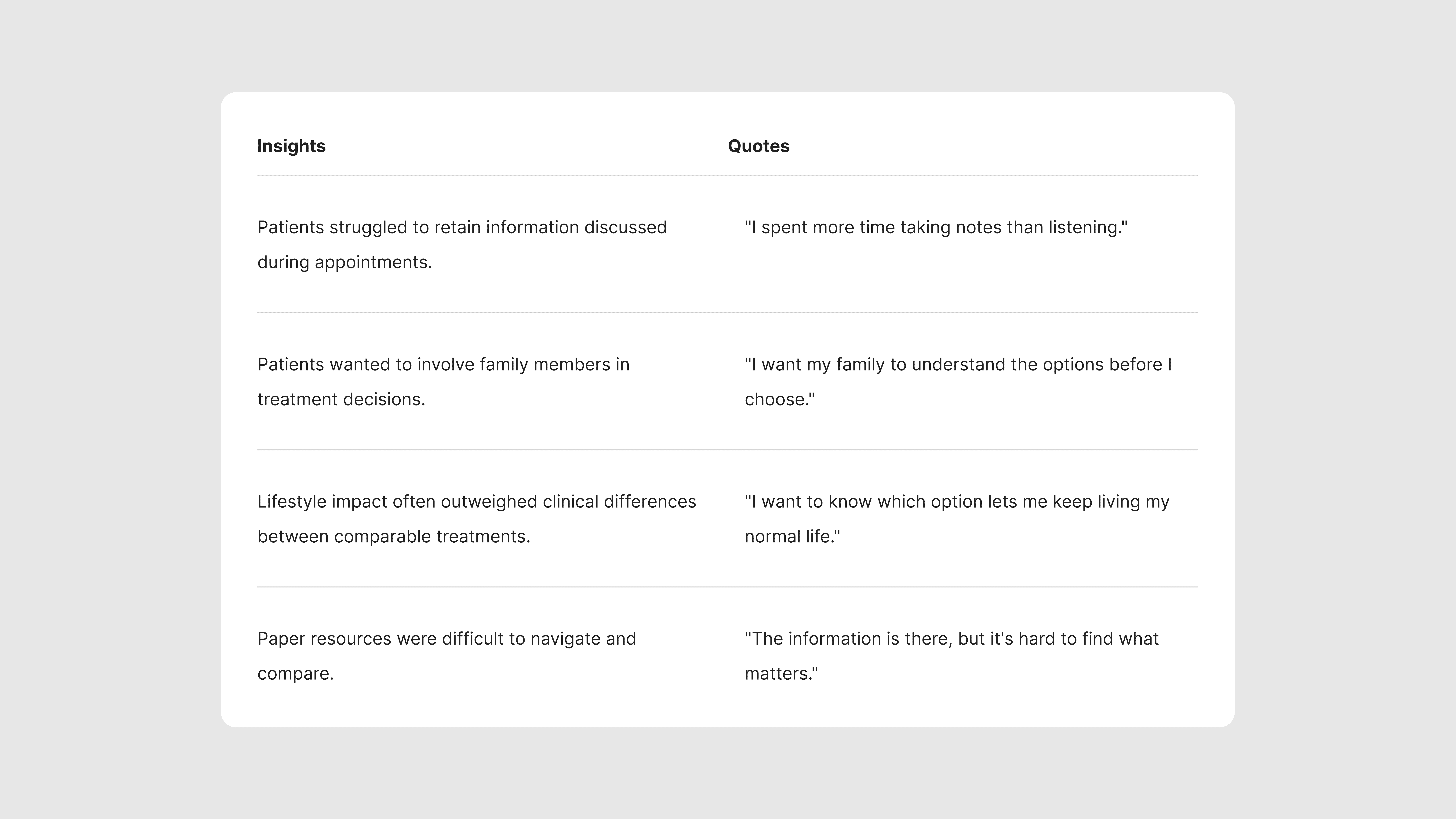
Through patient interviews, I identified key challenges patients faced when navigating cancer treatment decisions. While patients valued their clinician’s expertise, they wanted more support understanding their options, comparing treatments, and making decisions that aligned with their personal goals and lifestyles.
User Personas


The interview findings revealed recurring patterns in patients' goals, frustrations, and decision-making behaviors. To keep these insights at the center of the design process, I synthesized them into two personas representing key patient archetypes.
Journey Mapping

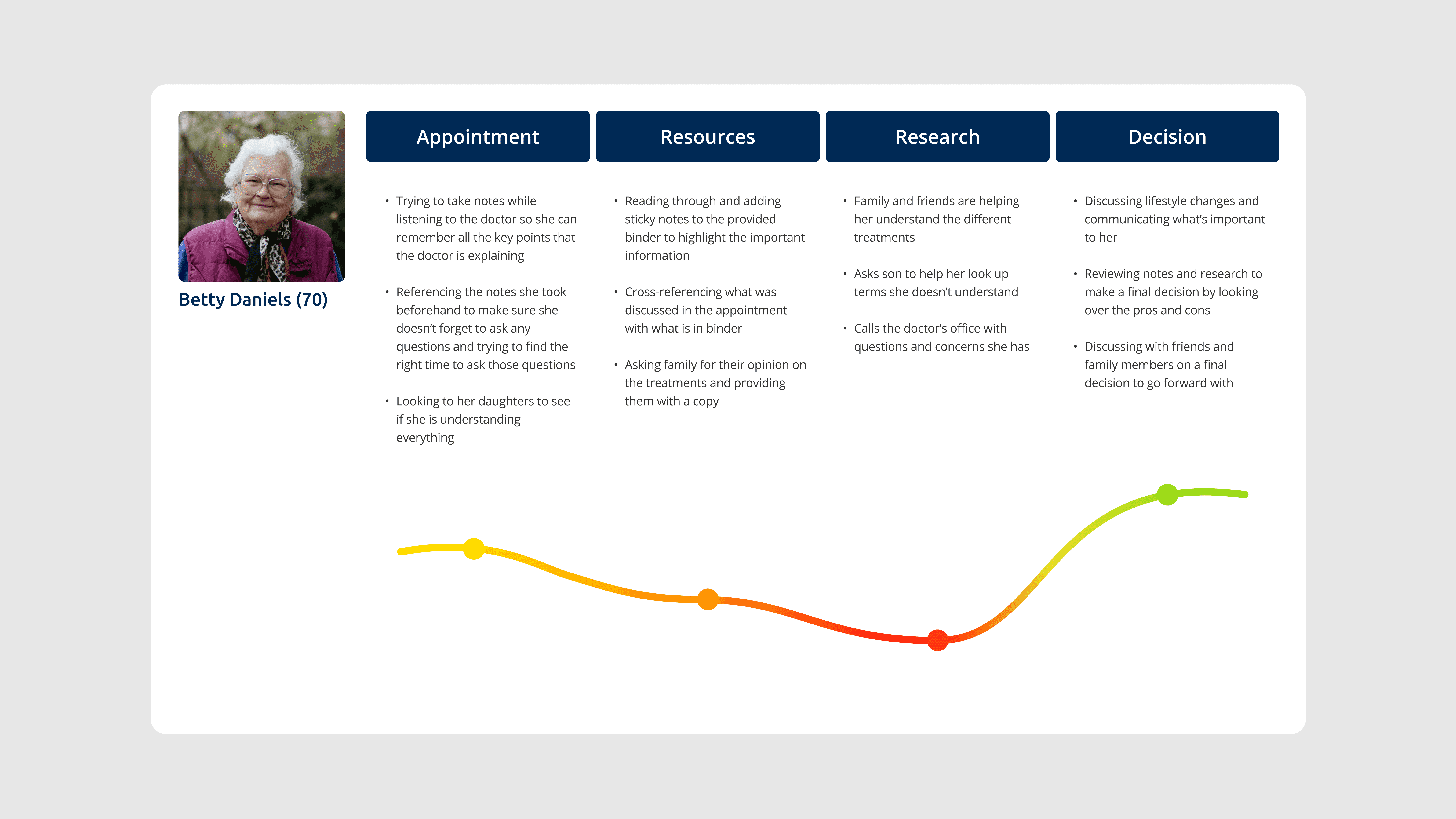

Building on the personas, I created a journey map to visualize the patient's experience from diagnosis through treatment selection. This helped communicate key pain points to stakeholders and align on where the product could deliver the greatest value.
Research Key Insights
Patients struggled to retain information
The amount of information shared during appointments made it difficult to absorb and remember key details.
Lifestyle influenced treatment decisions
Patients wanted to understand how each treatment would impact their daily lives—not just the clinical outcomes.
Comparing treatment options was challenging
Patients found it difficult to evaluate treatment options due to scattered information and complex medical terminology.
Decision-making extended beyond the appointment
Patients wanted an easier way to revisit information and involve family members in treatment discussions.
Patients valued trustworthy, personalized information
Patients wanted reliable information tailored to their diagnosis, lifestyle, and personal priorities.
With a clearer understanding of patient challenges, I reframed the problem into a design opportunity that aligned patient needs with the goal of enabling more informed, collaborative treatment decisions.
How might we help cancer patients confidently understand, compare, and choose treatment options that align with their personal goals and lifestyle?
Design Iterations
Design Iterations


Given the project's early stage and the challenges of recruiting patients for formal usability testing, iterations were guided primarily through feedback from the partnering clinician, cross-functional stakeholders, and regular design reviews. This collaborative approach helped refine the experience while ensuring the content remained clinically accurate and aligned with patient needs identified during research.
Final Designs
Komuni Treatment Plan - Final Designs
Choosing a treatment that fits your lifestyle

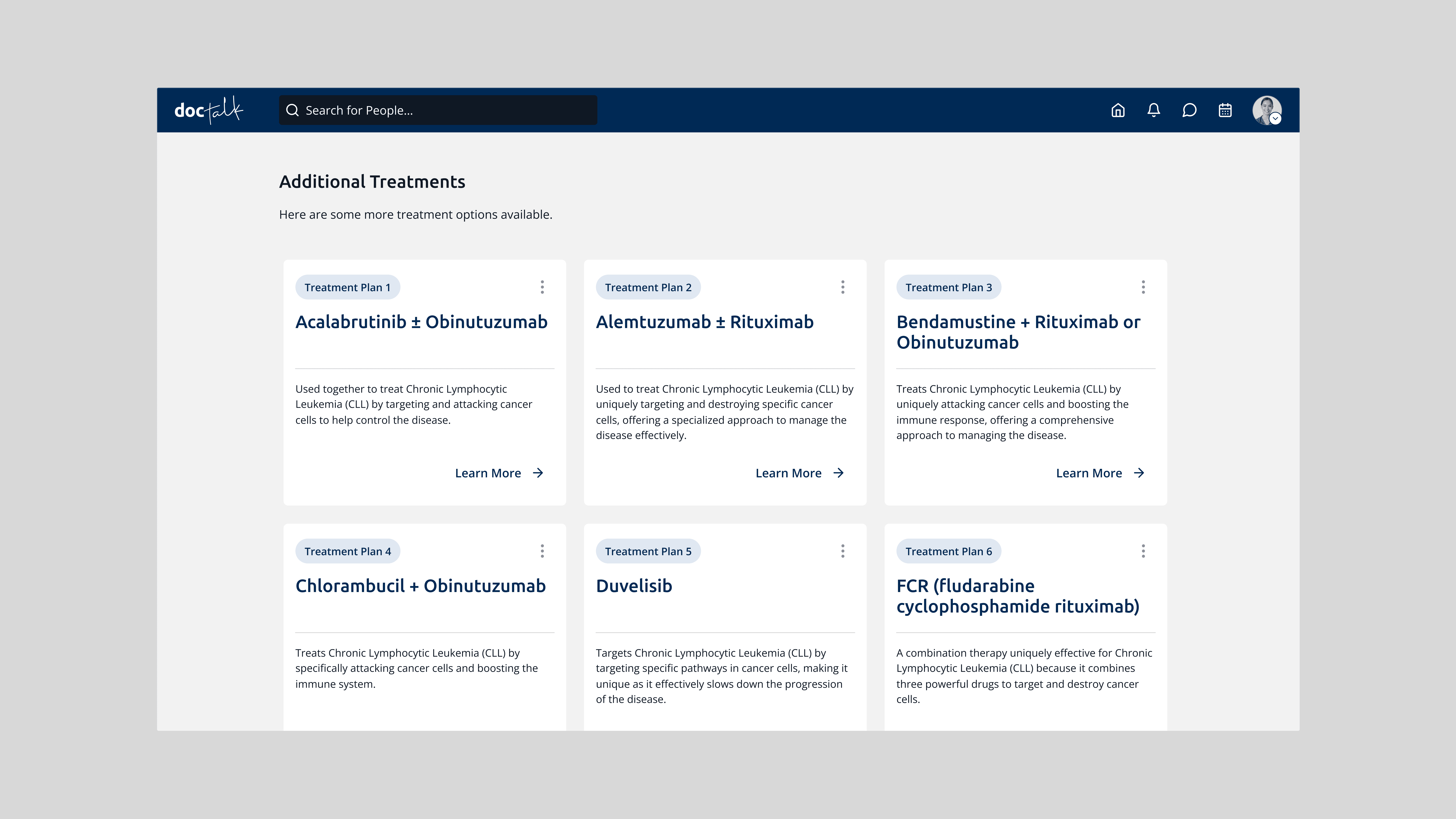
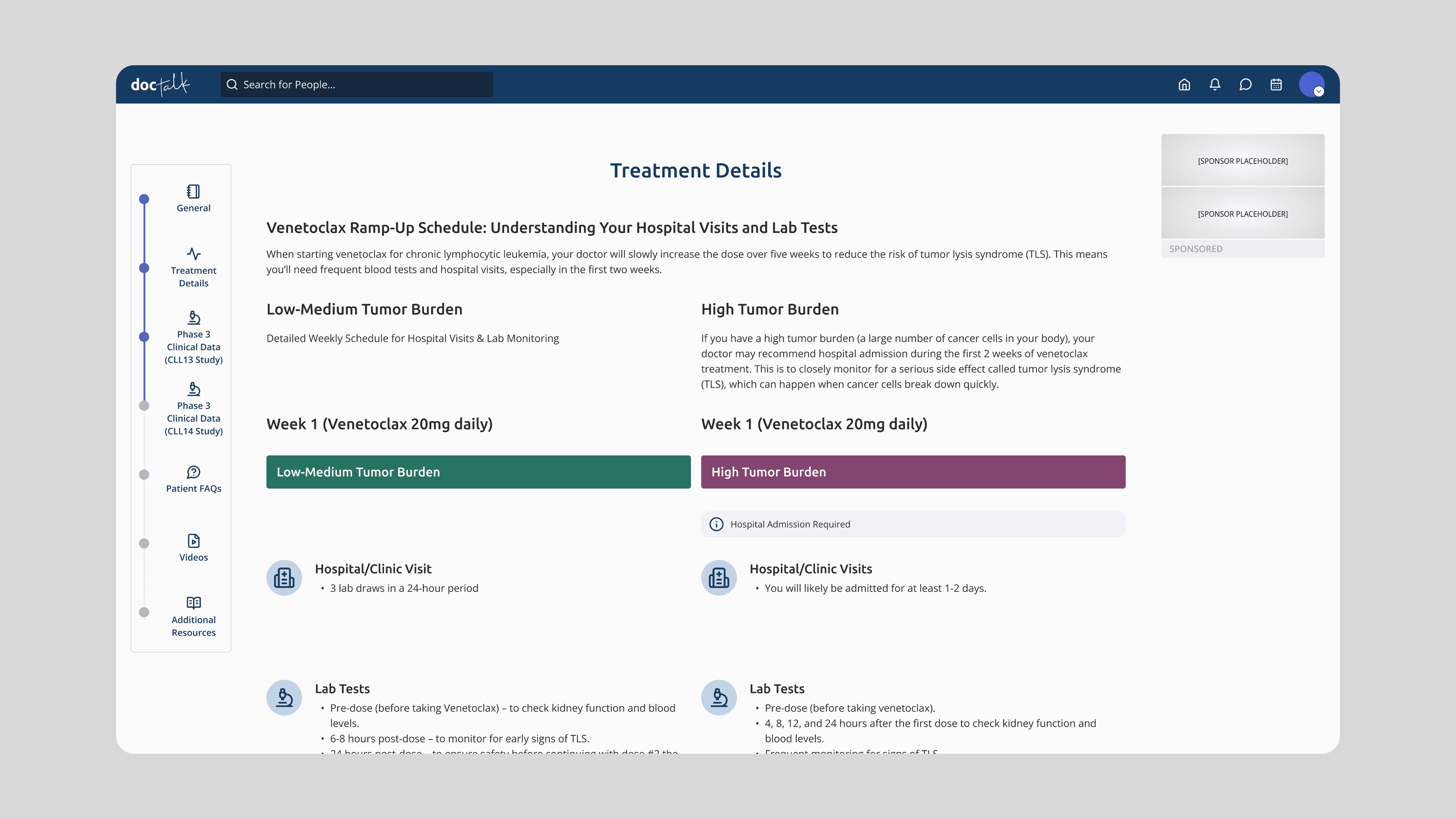
Rather than presenting every treatment equally, Komuni recommends personalized treatment options and highlights the factors that matter most to patients, including how treatments are administered, where they take place, and available funding information.
Compare treatmens with confidence

Patients struggled to compare treatment options using lengthy paper resources and complex medical terminology. I designed a side-by-side comparison experience that surfaced the most relevant information, making it easier to understand key differences and evaluate trade-offs with confidence.
Helping patients understand complex information

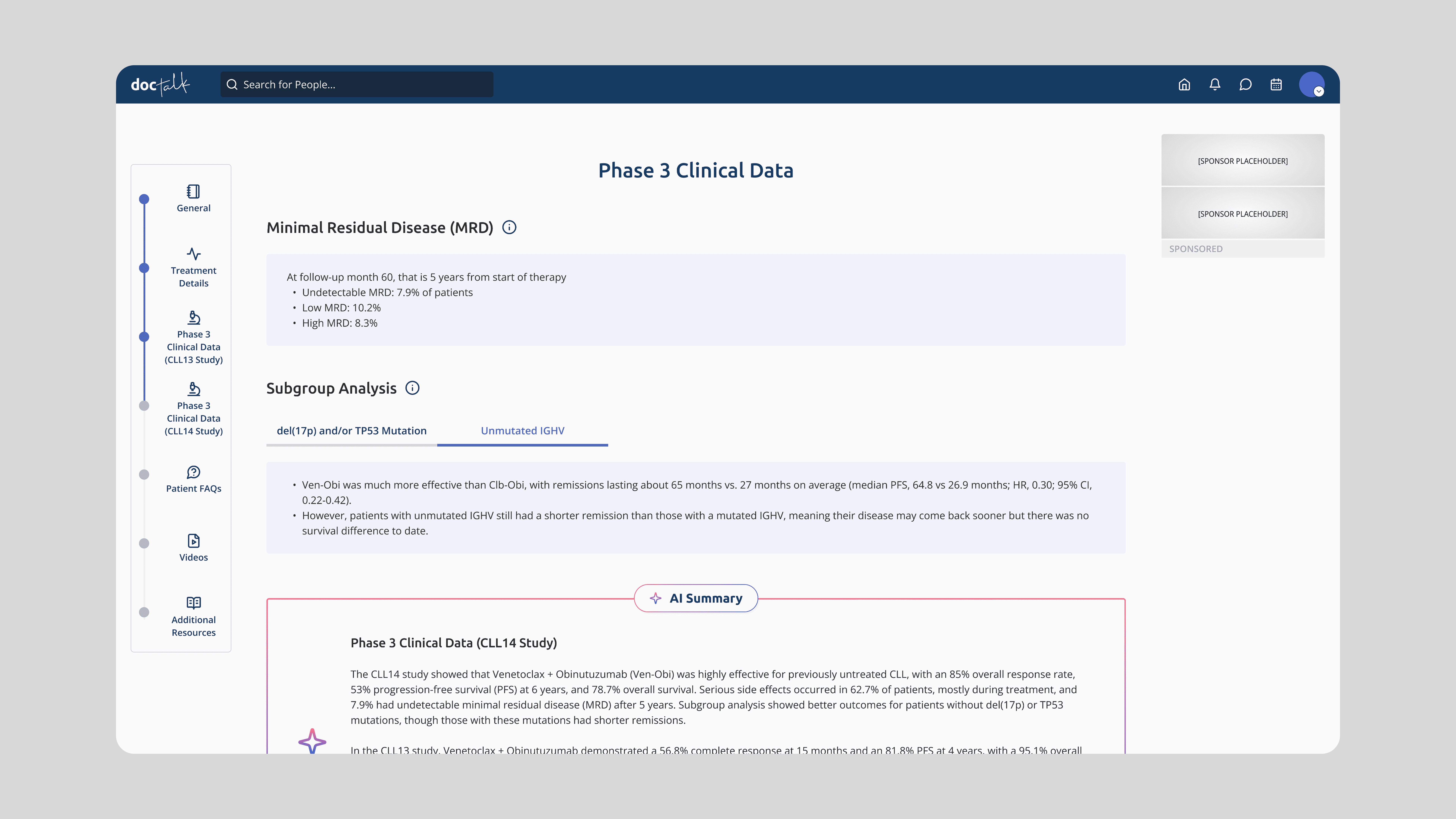
Patients often felt overwhelmed by the amount of clinical information presented during treatment discussions. I designed AI-powered summaries to translate complex treatment details into clearer, more digestible information, helping patients better understand their options and revisit key points when making decisions.
Bring family into the conversation


Research showed that treatment decisions often extended beyond the clinic. I designed sharing features that made it easy for patients to revisit information and involve family members in conversations, helping them make informed decisions together.
Plan ahead with a clear treatment schedule

Patients wanted to understand what treatment would actually look like in their day-to-day lives. I designed a clear treatment schedule that showed upcoming appointments, treatment frequency, and key milestones, helping patients understand the time commitment and plan around their existing responsibilities.
Get answers to common questions

